
Real Life
We opened this week’s episode with real-life updates, starting with Steven’s full-on birthday blitz — his birthday, his kids’ birthdays, all packed into the same window. There was dinner out, a rowdy round of Ransom Notes, and the proud report that his kid nailed a fully successful sleepover. Parenting achievement unlocked.
Devon, meanwhile, came in questioning reality: The Onion is still a newspaper? That somehow turned into a whole debate about debates (1 vs. 20 participants), which feels about right. And then his kid dropped the big question at home: how do we stop an asteroid from hitting Earth? Devon chose the only responsible answer: we “Armageddon” it.
Ben ended up on a binge of Home Alone and Hawkeye, which is a surprisingly coherent double feature when you think about it.
Future or Now
Steven: Why ’90s Brains Are Built Differently
Steven brought a pair of articles that explore why ’90s kids’ brains diverged from Gen Z’s: a piece from Psychology Zine (link) and a supporting breakdown from Newsweek (link).
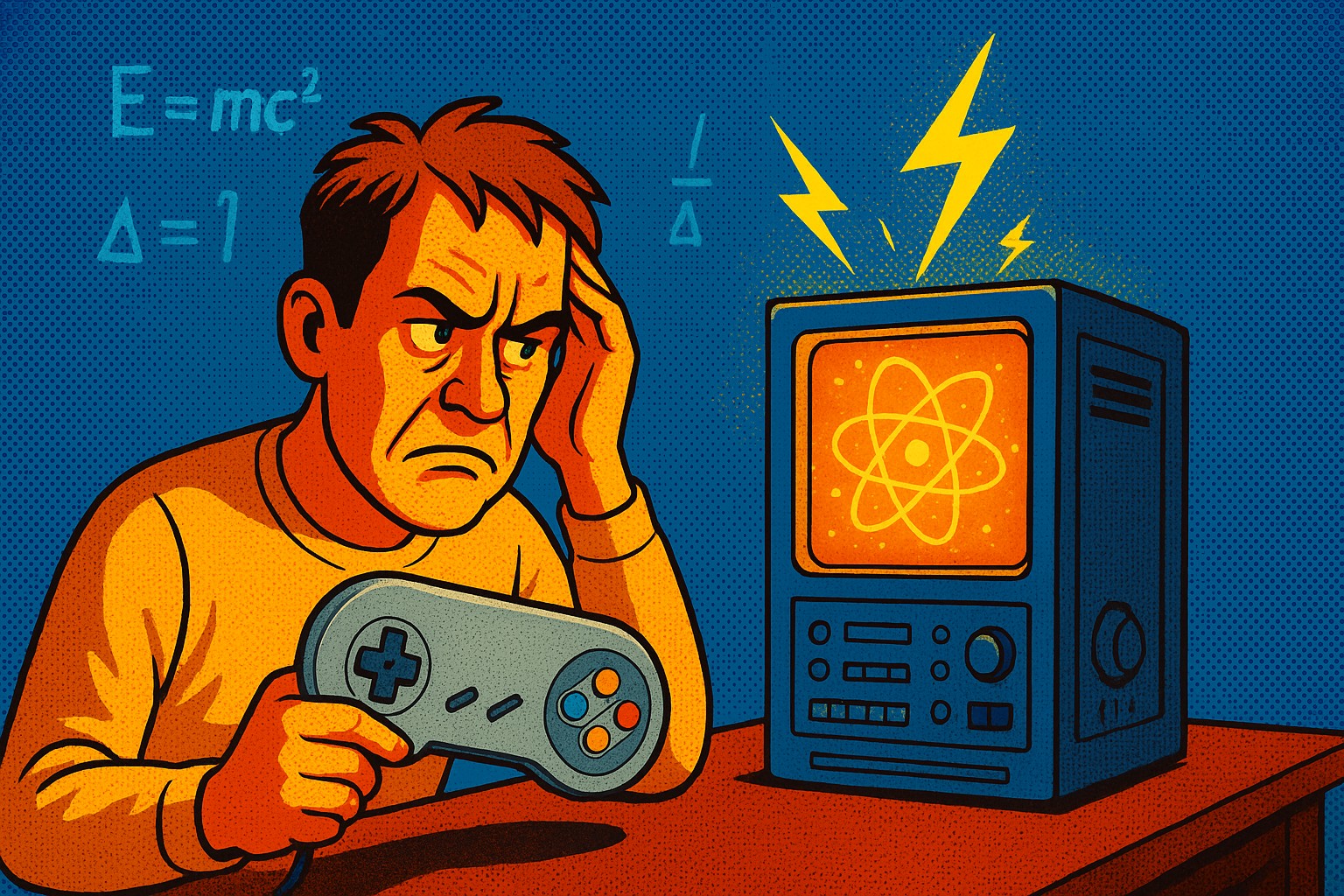
If you grew up racing Rainbow Road in Mario Kart or discovering secrets in Pokémon Red without a guidebook, you remember when games came in chunky cartridges, had clear endings, and handed out failure like candy. You got better, or you started over. That era hard-coded a very different reward system.
Compare that to now: kids juggling Fortnite battle passes, chasing Roblox skins with real money, and fending off constant push notifications baiting FOMO. According to the experts in those articles, this shift isn’t just technological — it’s actually altering how developing brains handle challenge, reward, and attention.
Devon: Can We Finally Trust Quantum Computers?
Devon dug into a fascinating breakthrough in quantum computing. Scientists have developed a method that can validate results from quantum computers in minutes instead of millennia. The report came from ScienceDaily (link) and the deeper technical writeup appeared in Quantum Science and Technology (IOP link).
Right now, quantum devices — especially GBS machines — are notoriously noisy, and verifying their answers is so computationally hard that we usually just trust whatever they spit out. This new technique already exposed errors in a major earlier experiment, which is both alarming and encouraging. If we want reliable quantum hardware, this is exactly the step we needed.
Ben: Giants on the Icelandic Landscape
Ben found something visually stunning: a design project that turns routine electrical pylons into towering human-shaped sculptures across Iceland. They’re eerie, monumental, and beautiful in a way infrastructure never gets to be. You can see the concept on the designer’s site here: choishine.com (link).
These pylon-giants use only minor structural tweaks to standard tower design, but the transformation is dramatic. Instead of anonymous metal frames, the landscape gets colossal steel figures marching across the horizon.
Book Club
This Week: “Dark Air” by Lincoln Michel
We read “Dark Air” this week — a moody, unsettling story that mixes environmental dread with strange atmospheric phenomena. You can read it for free on Granta:
granta.com/dark-air
Next Week: “The Red Thread” by Sofia Samatar
Next up is Sofia Samatar’s “The Red Thread” — intricate, mythic, and exactly the kind of story we love diving into. You can read it on Lightspeed Magazine:
lightspeedmagazine.com/fiction/the-red-thread
Leave a Reply