
This week, the Science Faction crew has rats, road trips, gaming marathons, and some surprisingly good superhero television before asking an important question: what happens when your dog gets its own digital assistant? We also look at a new weapon in the fight against AI scraping and tease what Steven has coming next week.
Real Life
Ben has some unfortunate pet news this week: tumors have appeared on one of the family rats. Meanwhile, the “fat” rat has been put on a diet, so apparently even the rodents are dealing with health and wellness goals.
On the entertainment side, Ben wonders whether Star Trek: Strange New Worlds may finally be getting a little too strange. Joe Lo Truglio, best known as Charles Boyle on Brooklyn Nine-Nine, enters the conversation and gives us plenty to talk about.
Devon has returned from Boston — but not the band. While there, he took one of the city’s famous duck tours aboard an amphibious vehicle and ventured out on a ghost tour populated mostly by people in character. Somewhere along the way, we also discover that Devon may be skeptical about cemeteries. Thankfully, he has no tumor news to report.
Steven, meanwhile, had an epic gaming weekend. That included Marvel Zombies, a game of Dungeon Crawl Classics, and a trip into the weird west with We Deal in Lead. He also checked out Lanterns and came away impressed. It’s a genuinely good police procedural made for adults that also happens to exist in a comic-book universe.
Future or Now
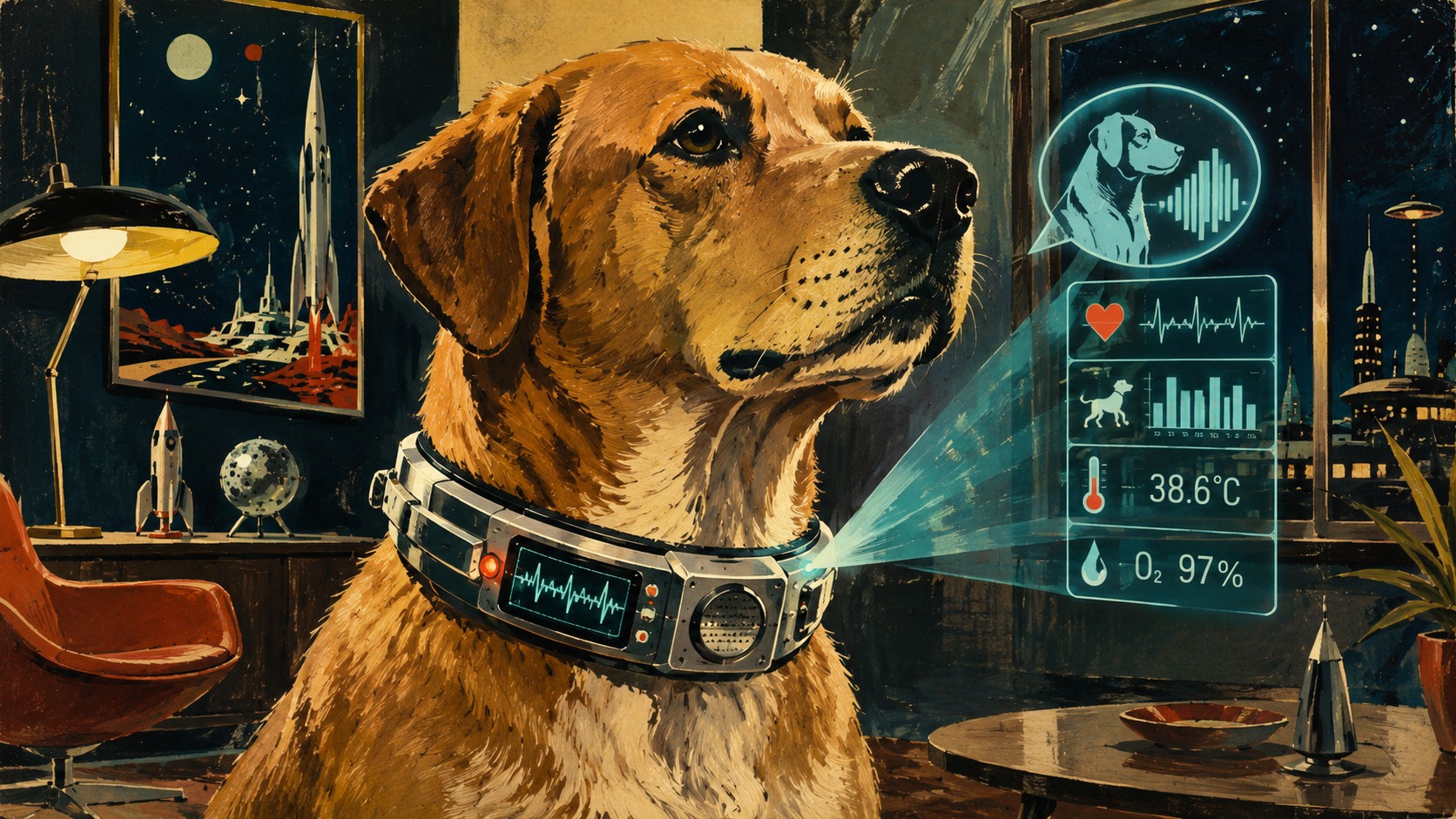
Ben starts us off with a question inspired by something he saw on a morning walk: What if your digital assistant lived on your dog’s collar?
Imagine a near-future version of Dug from Up. We’re probably not about to translate canine brain waves into speech, but a smart collar equipped with local AI, sensors, and a memory of your dog’s life could do quite a bit.
The collar could remember veterinary instructions and medication schedules, giving owners an easy way to keep track of their pet’s care. That could be especially useful for elderly pet owners or anyone managing a complicated treatment schedule.
It could also provide context when something goes wrong. If your dog eats something it shouldn’t, sensors and location data might help determine where it happened and what the animal encountered. Instead of answering the vet’s questions with a shrug, you’d potentially have an actual record.
Then there’s passive health monitoring. Think of it as an Apple Watch for dogs: heart rate, temperature, activity, blood oxygen, sleep, and other measurements tracked continuously. Rather than waiting for obvious symptoms, changes from an individual animal’s normal baseline could provide an early warning that something isn’t right.
But putting an always-listening, always-sensing computer around your dog’s neck creates an obvious problem: privacy.
The device potentially knows where you go, when you’re home, what your routines look like, and even what your house sounds like. Who owns that information? Where is it stored? Who can access it? A completely local system trained only around the pet could mitigate some of those concerns, but the temptation to turn that information into another giant pool of commercially valuable data would be enormous.
That’s the tension at the heart of the idea. The same technology could have tremendous benefits for animal health and welfare while simultaneously creating another surveillance system following us through our daily lives. We’ve already seen how technologies like automated license-plate readers can expand far beyond their original use cases.
Ben would very much prefer that his helpful talking dog collar not eventually become the Canine Gestapo.
Devon brings us another front in the ongoing battle over AI and the internet: “Devious New Font Turns AI Scrapers Into Mincemeat.” Researchers have developed a font designed to remain readable to humans while confusing automated systems scraping text for AI.
The idea opens up a much larger discussion about the future of AI training, ownership of online material, and whether technical tools can give creators more control over how their work is collected and used. If AI is going to remain part of our lives, finding ways to build systems around ethically sourced data may become increasingly important.
Steven doesn’t have a Future or Now story this week—but that’s because he’s saving something for next time.
Consider this your tease for next week’s episode.
Leave a Reply