
Devon made the wise decision not to join us this week, which leaves Ben and Steven unsupervised to talk about Star Trek, Star Wars, Linux, AI, and what exactly we should expect from the “free” software we use.
Real Life
Ben kicks things off with more Star Trek: Strange New Worlds, including a new episode that he loved…and the rest of his family absolutely did not. Apparently soap-opera Star Trek is officially a thing now, and that sends us down the inevitable rabbit hole of Trek lore, timelines, and the increasingly complicated ways all the different series connect to one another.
There’s also some good news from the world of science fiction: John Scalzi won the 2026 Hugo Award for Best Series for Old Man’s War. Scalzi celebrated the win over on his blog, where he seems appropriately delighted to bring home yet another little rocket.
Read John Scalzi’s “Suddenly: Hugo!” post
Steven, meanwhile, has been watching the numbers on last week’s episode, which has climbed to 124 views on YouTube. That leads directly into a question we probably shouldn’t be asking on this particular podcast: Should AI be writing our episode titles? If it comes up with better titles than we do, is that good? Bad? Embarrassing? All three?
The Science Faction Podcast on YouTube
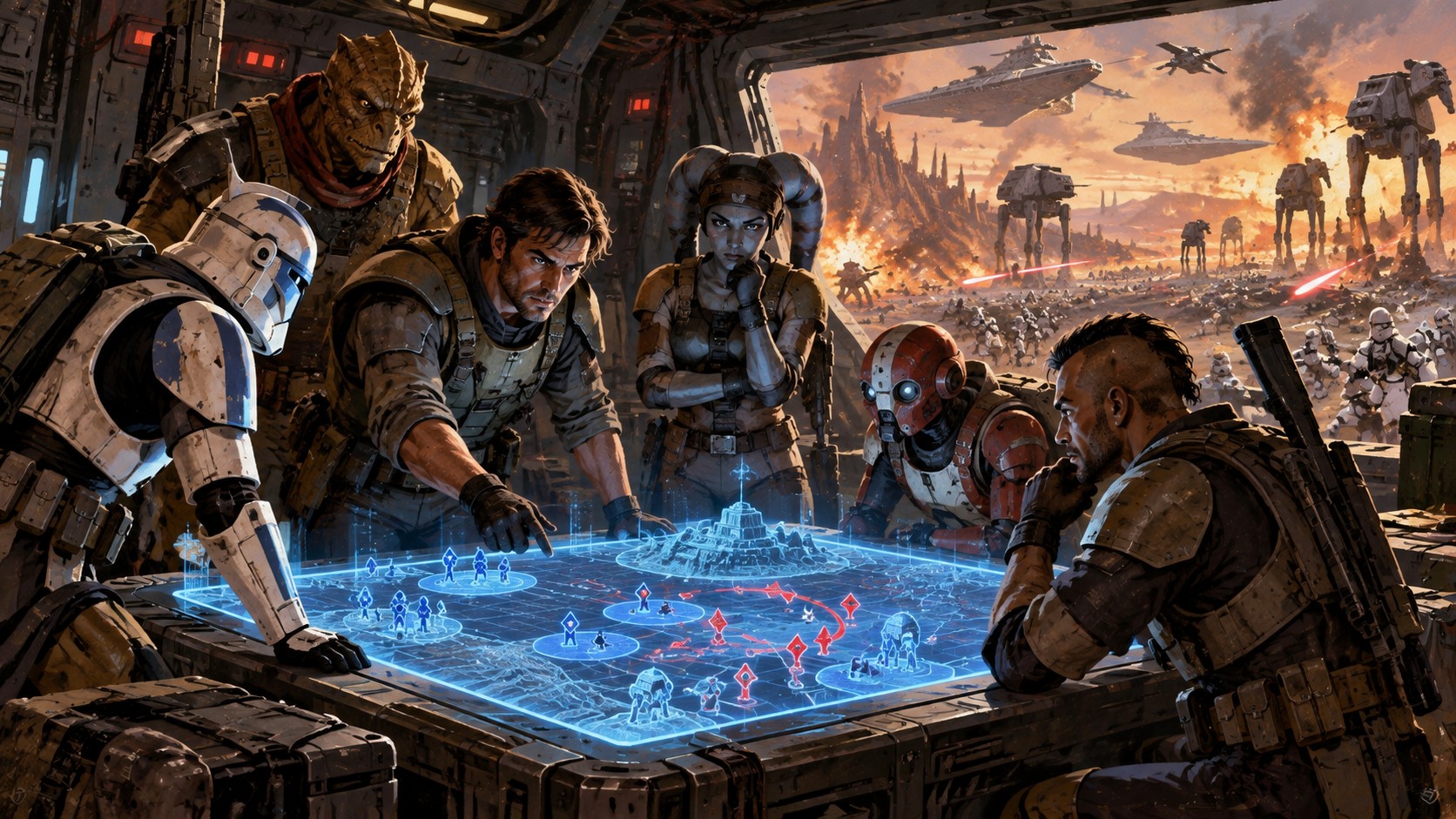
Steven also has about ten hours in Star Wars: Zero Company, and so far, it’s excellent. For X-COM fans in particular, there’s a lot to like here. Set during the Clone Wars, the game digs into corners of the Star Wars universe without feeling like it’s simply throwing familiar things onto the screen for the sake of recognition. It understands the setting, uses it well, and so far feels like a great fit for the tactical strategy formula.
Star Wars: Zero Company on Steam
Future or Now
Then Ben asks the question that sends us straight into the Linux lake: What is Omarchy, who is it actually for, and why did Steven decide to jump in?
That turns into a much broader conversation about Linux, open-source software, Twitter/X, vibecoded slop, and the appeal of actually taking control of the computer sitting on your desk. Modern computers are extraordinarily capable machines, but most of us interact with them through a relatively narrow collection of applications and interfaces. What happens when you start digging underneath all of that and customizing the machine around the way you want to use it?
There’s an important distinction, though, between being willing to experiment with something yourself and recommending that someone else do the same thing. Steven can mess around with Linux because he has another computer available if everything goes sideways. Having spare hardware, free time, and enough technical experience to troubleshoot problems is a privilege that changes the equation considerably.
And that brings us to an even bigger question: Who should we actually support when it comes to “free” software?
Free and open-source software doesn’t magically appear. Somebody is writing it, maintaining it, fixing bugs, answering questions, hosting infrastructure, and dealing with the endless parade of people asking why Feature X doesn’t work exactly the way they want. If software gives us more control over our computers and reduces our dependence on giant technology companies, maybe “free” shouldn’t automatically mean “something we should never have to pay for.”
This week, we’re wandering through several different flavors of nerd territory: Star Trek continuity, Star Wars tactics, AI creativity, Linux experimentation, and the people quietly building the software that lets the rest of us tinker with our computers.
Just another perfectly normal episode of Science Faction.
Leave a Reply